

AI changed the game
If I had said this post’s title out loud twenty years ago, I don’t believe I would have lasted this long in the market. But right now… there is nothing wrong with it. AI era. The game changed.
I can also say that over my career I lost count of how many times I maxed out my hardware. Yet I was genuinely surprised the day I discovered that 64 GB wasn’t enough for me anymore — and neither was a single RTX 4500 Pro Blackwell graphics card, with even my Claude Max plan (5x) hitting its limits. I had to adapt.
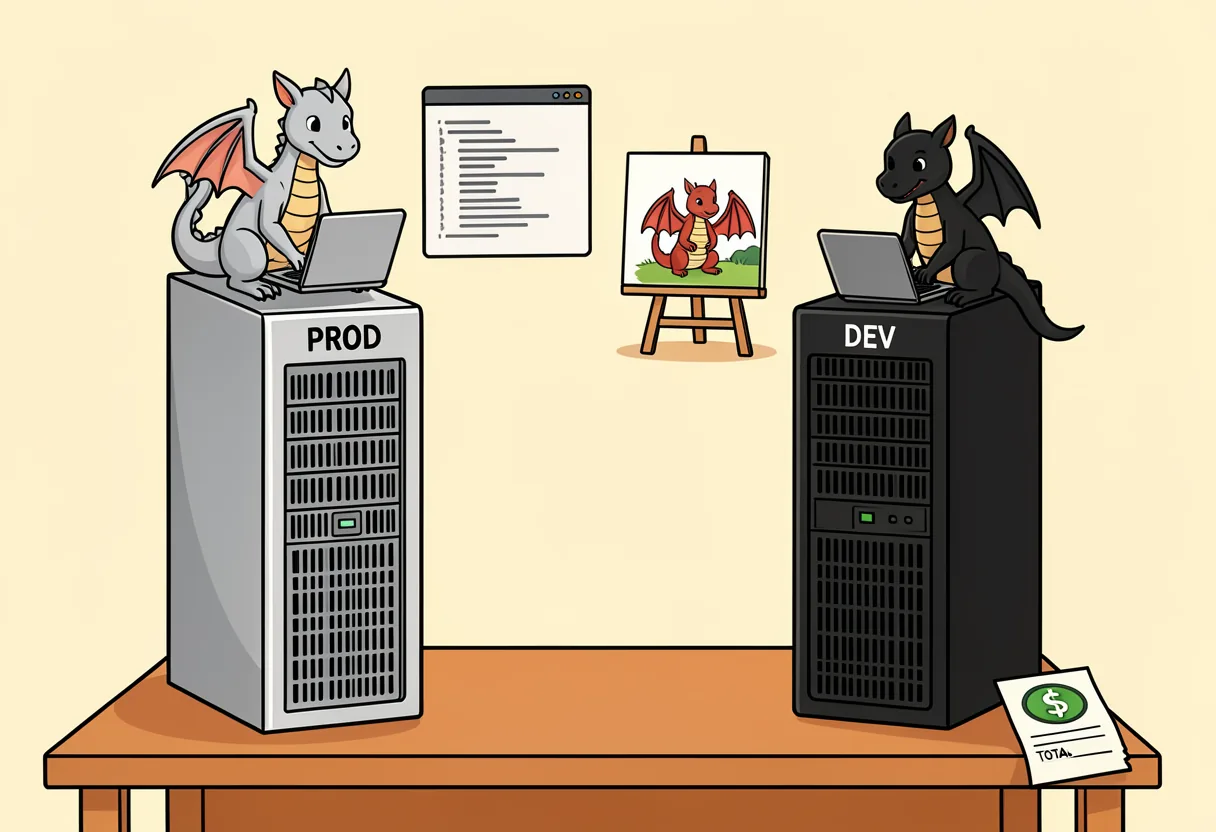
Let’s be clear: I built this website first on Dev (RTX 2000 with a quantized model), but now I’ve switched to DeepSeek’s deepseek-v4-flash — it costs just a few cents a day to keep the articles updated. We’re talking about a static website. Content like video and images — or real systems with Docker containers and real data — is another story. That’s my rule: when it’s real, I build on Prod.
How Claude and the dragons talk
The two machines live in different buildings and share no LAN — every packet between them rides the tailnet:
The Qwen arc
This website was built with qwen3-coder-gsd:30b — at the time, the same model on both dragons, with very different fits. On blackdragon’s RTX 2000 (16 GB) it was genuinely too heavy for the card: offloaded and slow, and still the model that wrote this article.
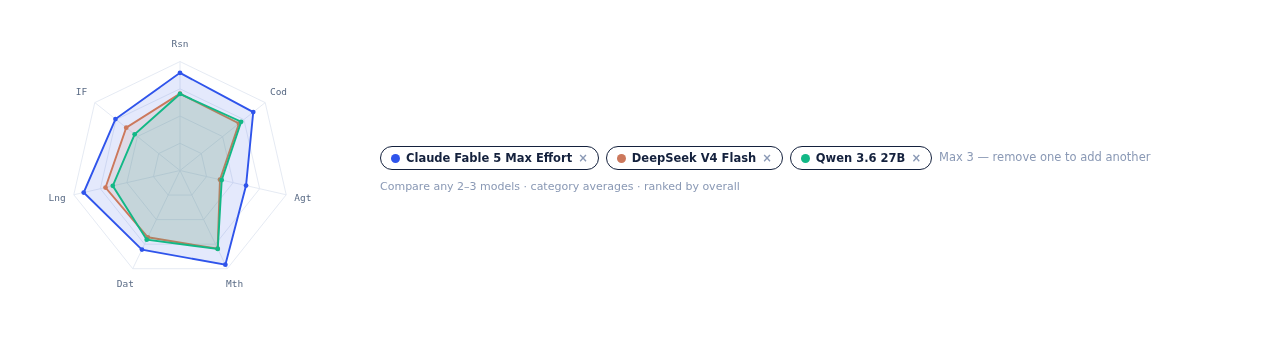
The story since is shorter. Silverdragon’s coding model has moved to qwen3.6-gsd:27b, a dense 27B that fits entirely in the RTX 4500’s 32 GB of VRAM — which is focused on doing the core development without me spending tokens abroad. And parallel work is possible with a cheap DeepSeek or with the Claude plan. Blackdragon, meanwhile, is out of the coding business entirely.
Spec-Driven Development
In the end, AI really did demand more hardware for us developers to produce more. I can go up to three consoles at the same time without exceeding anything, and that is great!
However, effectively using something is different from just using something. Effectively producing AI software became a new technique of its own. Why do I say so? Because — I asked Claude:
"By using qwen the way we are, are we really minimizing Fable usage?"
Honestly? Only partially — and for today's workload, probably not much.
"Which change made the most effective use of it today?"
Most effective: the /search feature. Solidly effective: the coordinated multi-edit content changes. Not effective: the one-liner loop — the panel width dance (18rem → 24rem → 28rem).
Acting as a Software Engineer — by providing a small paragraph with the desired changes, baseline instructions on how they should be done behind the scenes, and the delivery expectations, instead of quick fire-extinguishing requests — is what helps you benefit from this infrastructure.
To help me even further, I use GSD with Fable 5 to write big plans — answering many questions across a few different phases — and let silverdragon’s qwen code for as many hours as it can.
A lighter bill, eventually
Used badly, a Fable Max (5x) plan can burn through itself fast — but thanks to my own AI infrastructure, I brought my usage down from roughly 20% per hour to roughly 8%, and that alone made my life better. I still haven’t managed to drop from Max to Pro and lighten the bill, but at least nothing blocks me anymore.